



Volume 1, Issue NO. 3
The Cascade Report
This month, I want to talk about two things that are going to reshape orthodontic practice ownership in ways most people aren't prepared for.
The first is AI agents. Not AI tools. We covered those in Issues 1 and 2. I'm talking about software that doesn't just help you do things faster. It does things for you. Companies like Lead Sigma are deploying AI that answers calls, qualifies leads, and books appointments around the clock. Dental Intelligence is rolling out AI-powered workflows right now. The technology is moving faster than most practices realize, and the gap between early adopters and everyone else is about to become very visible.
The second is something almost nobody in our industry is talking about: starting July 1, the federal government is eliminating Graduate PLUS loans and capping dental student borrowing at $257,500. The average orthodontic resident carries $567,000 in debt. Do the math. This is going to fundamentally change who enters the profession and what associate hiring looks like over the next decade
ALGN - Align Technology
$176.56
▼ 7.6% YTD
Stock price YTD ▼7.6% | Q1 '26 revenue: $1.04B (+6.7% YoY) · 685.7K Invisalign shipments · Q2 earnings: July 29
Market Pulse
DSO & M&A Watch
DSOs Go De Novo
This quarter's headline isn't another acquisition. It's a strategy shift. Smile Partners USA opened its first-ever de novo practice on January 16 in Saline, Michigan, breaking from its acquisition-only model to build from scratch.
They're not alone. Heartland Dental added 7 practices in March, 5 of them de novos. Heartland's LAUNCH program actively recruits new graduates and residents to lead these locations, giving early career doctors the backing of a full operational platform from day one. The math is driving the strategy: when acquisition multiples hit 9-11x EBITDA for platform practices, building new can be cheaper than buying existing.
For independent practices, this matters. A de novo competitor doesn't replace an existing practice. It adds a new one in your market. With DSO-level marketing budgets, integrated technology stacks, and operational playbooks from day one.
Envista's Q1 Surge
While Align held steady, Envista Holdings delivered the quarter's surprise: $705.5M in revenue, up 14.4% year-over-year with double- digit growth in its orthodontic segment. Envista's portfolio includes Ormco (brackets, wires) and Spark aligners.
The takeaway: the orthodontic supply chain is growing across the board, not just in clear aligners. Practices are investing in both fixed and aligner workflows, a sign of clinical confidence and patient volume growth.
SPECIALTY PARTNERS
220+ offices · 28 states · 39% growth rate Named to 2026 Inc. 5000 Regionals. Entering joint ventures in CA and OH where doctors retain clinical autonomy, their practice brand, and an ownership stake while gaining access to S1P's operational platform: marketing, revenue cycle management, HR, IT, and group purchasing. Unlike a traditional acquisition where the doctor becomes an employee, S1P's JV model is designed to preserve what makes each practice unique while providing the infrastructure that's increasingly difficult for independents to build alone
PE & DEAL FLOW UPDATE
Private Equity Isn't Slowing Down. It's Getting Smarter
Dental had 161 PE deals in 2024 and 149 in 2025, making it the most active healthcare sector for private equity investment. And 2026 is on pace to match. But the strategy is evolving.
The New Buyer Profile
Per Becker's latest analysis, 69% of DSOs plan to increase acquisitions in 2026. Only 16% of the approximately 200,000 U.S. dentists are currently affiliated with a DSO, leaving massive consolidation runway.
The shift this quarter: buyers are looking past revenue. Integration maturity, team retention rates, and whether the practice can run smoothly through an ownership transition are now standard due diligence criteria. In orthodontics, contracts receivable and multi-year treatment plans provide predictable revenue that persists through transitions, which is one reason ortho continues to command premium multiples. Still, buyers want to see operational independence: documented systems, trained teams, and leadership infrastructure that doesn't depend on any single person.
The ADSO Summit Signal
The ADSO Summit (June 15-17, Chicago) drew 1,000+ attendees, the industry's largest DSO leadership gathering. Keynotes from a former Amazon executive (John Rossman) and futurist Jacob Morgan signal where DSO thinking is heading: operational scale, not just location count.
Group Dentistry Now presented its Emerging Groups to Watch awards, spotlighting six platforms: Blueprint Smiles (GA, 25%+ EBITDA margins), Bright Direction Dental (Midwest, 40+ locations with no PE backing), Burch Dental Partners (100% doctor retention), Lavender Dental Group (MI, earn-in equity path for associates), Mosaic Dental Collective (CA/WA/ID, PE-backed but
doctor-led), and Oakwood Dental (NY/NJ). The common thread: operational discipline and doctor-centric models that retain talent
Orthodontics continues to represent approximately one-third of all dental M&A activity. Ortho remains a top PE target due to favorable margin profiles, predictable revenue, and cross-referral synergies. 78% of DSOs expect recapitalization within 12-36 months.
“"The practices that will command top-tier multiples are the ones investing in team and systems now, not just clinical volume." FOCUS Investment Banking, 2026 Orthodontic Valuation Report”
FOCUS Investment Banking
2026 Orthodontic Valuation Report
Industry Moves
People, Platforms & Partnerships
PLATFORM SHIFT
Planet DDS: The $545M Gap
Planet DDS released its 2026 Dental Industry Deep Dive Report, analyzing 8,500+ practices across 497 DSOs representing $6.79 billion in gross production. The headline finding: a $545 million untapped opportunity hiding in the performance gap between top-quartile and bottom-quartile practices. Three findings worth circling: (1) Roughly 1,050 practices average 44 chairs but generate only $56K per chair annually. That underutilized capacity is the core of the $545M figure, and it requires zero new patients to capture. (2) The most consistent practices produce 28% more revenue per day than the most volatile, a 9.5 percentage-point growth gap driven by workflow consistency. (3) The industry average case completion rate is just 47%, with some practices showing 77% acceptance but only 20% completion. The gap isn't clinical. It's operational.
Greyfinch + Align Integration
Greyfinch launched a direct Align Technology integration this month, allowing practices to manage Invisalign cases and iTero workflows directly inside the practice management platform. No more toggling between systems. For practices running Greyfinch, this is significant. It means the treatment planning, aligner ordering, and case tracking that used to require separate logins now live in the same environment as scheduling, billing, and patient communication. The standout feature: a two-click iTero scanning workflow. Checking a patient in auto-creates their profile and order in iTero, and completed scans push back into Greyfinch automatically in roughly 10 seconds. Bidirectional data flow means treatment tracking stays current across both systems without manual entry. Available in the US and Canada.
PRODUCT LAUNCHES
OrthoFX: Integrated Buttons
OrthoFX launched FXIntegrated Buttons, their first fully manufactured buttons seamlessly formed within the aligner itself. No bonding, no chair time for button placement.This eliminates a step that's been a friction point in clear aligner workflows for years.
Ormco: Digital Bonding Expansion
Ormco expanded its Digital Bonding platform to include Damon Clear, Mini Diamond, Orthos, and Titanium Orthos brackets at AAO 2026, plus debuted EtchFree Bonding with enhanced twist-top delivery. For practices building toward a fully digital workflow, there are now more indirect bonding options than ever across both bracket and aligner systems.
$567K
Average orthodontic resident debt. Under the new federal caps, lending will cover less than half of this amount. The gap will need to be filled by private loans at higher interest rates, or not at all.
$257.5K
New aggregate federal borrowing cap. Lifetime cap across all degree programs for professional students, effective July 1, 2026
CONVERSATION TO WATCH
The Federal Student Loan Overhaul
Effective July 1, 2026, the federal government is eliminating Graduate PLUS loans, the primary borrowing mechanism for dental and orthodontic residents, and imposing a $50,000 annual cap and $257,500 aggregate lifetime cap on graduate student borrowing. The AAO has met with over 60 Congressional offices to advocate against these changes, warning that they could significantly impact the orthodontic workforce pipeline. The average orthodontic resident currently carries approximately $567,000 in total student loan debt. This is one of the most consequential policy changes for the profession in years. Casey's Take on page 12 breaks down what it means for practice owners, associate hiring, and the future of the workforce. Don't skip it.
REGULATORY UPDATE
Insurance Reform Momentum
37 insurance reform laws passed in 2025. Starting 2026, most plans are required to offer annual maximums of at least $2,500, with many moving to $3,000+. For orthodontic practices billing D8080 or D8090, those maximums are what matter most. Supply costs are rising at 3x the rate of insurance reimbursement growth, meaning the fiscal squeeze on practices is tightening, not loosening.
REGULATORY UPDATES
ADA CE Standards Update
Streamlined ADA CERP continuing education standards took effect June 1, 2026. Maryland extended its CE completion window to 2.5 years and increased infection control requirements from 2 to 3 hours within the 30-hour total. Minnesota eliminated the Dental Assistant State Licensure Exam, now recognizing DANB exams. California (AB 873, effective January 1, 2026) expanded dental assisting scope: board-certified DAs with approved courses may now perform coronal polishing, revised requirements now apply for orthodontic assistant permits, and unlicensed DAs must obtain radiation safety certificates for radiographic procedures.
"Only 16% of approximately 200,000 U.S. dentists are currently affiliated with a DSO, leaving massive consolidation runway. The question for independents isn't whether this changes your market. It's when."
Becker's Dental Review, June 2026
Feature
The AI Agent Is Here
And It's Not What You Think
There's a distinction forming in dental technology right now that most practice owners haven't noticed yet. And by the time they do, the gap between the practices that moved early and those that didn't will be significant.
The distinction is between AI tools and AI agents. An AI tool helps you do something faster. Think voice-to-chart transcription, automated insurance verification, or an AI-generated treatment plan suggestion. You're still driving. The tool just makes the car faster.
An AI agent does the work for you. It doesn't wait for a prompt. It identifies a task, executes multiple steps, and delivers a result, often without anyone touching it. Think: a new patient calls, the AI agent answers, schedules the appointment, sends the confirmation, updates the PMS, and triggers the welcome sequence. No front desk involvement. No lag. That's not science fiction. That's what Lead Sigma is doing right now. Their AI handles inbound calls 24/7, qualifies new patient leads, books appointments, and triggers multi-channel follow-up sequences across text, email, and phone. It connects directly to your CRM and PMS, routing leads and tracking attribution so you know exactly which marketing dollars are converting. No front desk bottleneck. No missed afterhours calls.
Who Else Is Moving
Dental Intelligence announced a new wave of AI-powered features in May, focused on reducing staff workload while preserving human connection. The features are rolling out through Q2, with specific capabilities being released on a rolling basis. Worth watching as details emerge.
DIBS AI dropped Version 9.0 with three fully automated platforms: AUTO PHYSICS, AUTO SETUP, and AUTO TRAY, eliminating manual orthodontic lab workflows entirely.
Chipp.ai represents a different approach: a no-code platform that lets practices build and deploy custom AI agents trained on their own data. Think of it as building your own AI assistant that knows your scheduling rules, insurance FAQs, and pricing. Practices can deploy these agents on their website, phone system, or messaging channels in under 20 minutes. It's not dental-specific, but the flexibility makes it worth exploring for practices that want control over how AI represents their brand.
The gap between adoption and implementation is where the real opportunity lives.
58%
of dental practices have adopted or plan to adopt AI/automation in 2026
<11%
have embedded AI into measurable workflows
What the 11% Are Doing Differently
That 58%-to-11% gap tells the whole story. The vast majority of practices that "adopted AI" are still treating it like a novelty, a feature they turned on, demoed once in a team meeting, and never integrated into daily operations. This is the exact pattern we've been calling out since Issue 1: the problem isn't access to technology.
It's operationalizing it. And that's where the Design, Test, Execute framework matters more than ever.
Here's what the practices in the 11% are doing that the other 47% aren't:
1. They start with the problem, not the product. They're not asking "what AI tool should we buy?" They're asking "what workflow is costing us the most time, the most errors, or the most revenue, and can AI take ownership of it?"
2. They test with structure, not hope. Not a vague pilot. A defined timeframe, clear metrics, and a control. If the AI call handler reduces missed calls by 30% over 60 days, it stays. If it doesn't, it goes. No emotional attachment to the technology.
3. They execute with documentation and ownership. The AI becomes infrastructure: documented, trained on, assigned to a team member who owns its performance, and measured weekly. Not a side project. Not "something IT set up."
Where AI Agents Are Creating Real Impact Right Now
35%
reduction in front-office call volume. AI-powered call handling and scheduling
40%
reduction in patient wait times. Scheduling optimization via AI (Orthotown data)
40%
reduction in administrative burden. AI insurance processing and verification
91%
caries detection sensitivity. Leading radiograph AI diagnostic accuracy
These aren't marginal improvements. They're the kind of operational gains that used to require a full-time hire. And they compound: a practice that reduces call volume, speeds up insurance processing, and tightens scheduling simultaneously isn't just saving time. It's freeing its team to focus on the patient experience that drives case acceptance.
What This Means for Practice Owners
Here's what gets lost in the AI conversation: orthodontic practices are, and should remain, human-centric. You are a service-based business. The in-person, face-to-face interactions between your team and your patients are where the magic happens. That doesn't change because AI showed up.
What AI does is clear the path. It handles the administrative noise, the operational busywork, the behind-the-scenes tasks that pull your team's attention away from the people sitting in your chairs.
Think about what that actually looks like in practice. Your team at 8:30 in the morning isn't rushing through a backlog of voicemails and insurance verifications. They're greeting patients, making real conversation, starting the day with genuine connection. At 4:00 in the afternoon, your front desk isn't frantically trying to confirm tomorrow's schedule while checking patients out. They're fully present.
That's the future worth building toward: a practice where the team is less "busy" so they can be more intentional. Where every patient interaction throughout the day, even during the traditionally chaotic peak hours, feels unhurried and personal.
Here's what I'd recommend if this resonates:
Pick one workflow that pulls your team's attention away from patients. The one that
causes the most friction or the most dropped balls per week.
Research the AI options for that specific workflow. Not "AI in general." One workflow, one tool.
Run a structured 60-day test with clear before/after metrics. Define success before you start, not after.
Assign a team member to own it. AI without ownership becomes shelfware within 90 days
For Vendors and Partners
If you're a rep, a vendor, or a technology partner reading this, here's why this matters for your business too.
The practices that implement AI effectively are the ones with clean data, documented workflows, and teams trained to work alongside automation. They're also the practices most likely to adopt your products successfully and become long-term customers. Practices investing in AI infrastructure aren't just tech-savvy. They're operationally mature. That's your best buyer.
The ones that are chronically reactive, understaffed, and running on tribal knowledge? They'll buy your product, struggle with implementation, blame the tool, and churn. You already know this.
The opportunity for vendors right now is to lead with implementation, not just features. The platform that wins in orthodontics won't be the one with the most AI capabilities. It'll be the one that helps practices actually use them.
Casey Bull
CascadEffects
"The practices most likely to invest in your product are the ones with operational clarity. They know what a dollar spent should return. Reactive buyers churn. Informed buyers grow."
Practice Observations
What We're Seeing
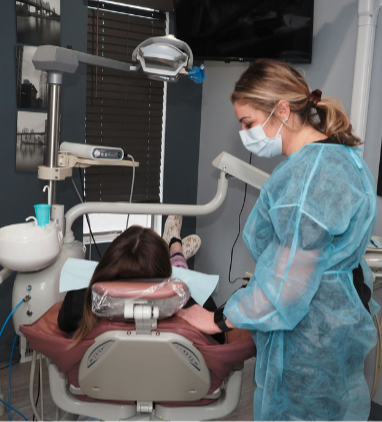
Tech Drag Is Getting Worse, Not Better
This is the conversation nobody wants to have, but every practice owner is feeling: overhead is climbing at roughly 3% annually while revenue per doctor is declining. Equipment and supply costs are up approximately 5% year-to-date. And here's the stat that should be circled in red: supply costs are rising at 3x the rate of insurance reimbursement growth.
The industry average for overhead is 60-65% of collections. But many independent practices are running above 80%. At that level, there's no margin for error. One bad month, one unexpected repair, one staff turnover cycle, and the practice is underwater.
The fix isn't cutting costs blindly. It's understanding where your dollars are going and whether they're producing returns. A practice spending 70% on overhead but generating 8%+ production growth is in a fundamentally different position than one spending 70% and flatlined.
What we're recommending: Pull your overhead ratio for the last 12 months. Break it into four buckets: staffing, supplies, facility, and technology. Compare each to your production growth. If any bucket is growing faster than production, that's your starting point.
The De Novo Signa
When DSOs shift from buying practices to building them, the competitive landscape changes. A de novo practice doesn't replace an existing one in your market. It adds one. With integrated technology, pre-trained staff, established brand playbooks, and marketing budgets that most independents can't match. We're watching this closely. Heartland Dental opened 5 de novos in a single month. Smile Partners USA just launched its first. The economics of building new are increasingly competitive with acquiring at 9-11x EBITDA.
If you're in a market where a DSO-backed de novo opens across town, the patients it attracts aren't coming from nowhere. They're coming from existing practices in the area. The best defense is the same thing that commands premium multiples: a team and brand that patients choose on purpose, not by default.
3.5%: The Number That Matters
Chris Bentson reported on The Golden Age of Orthodontics podcast that patient starts grew 3.5% after three consecutive years of decline. That's genuinely good news for the profession.
But the question is: who's capturing that growth? The practices with execution rhythm, leadership infrastructure, and operational clarity, or the ones still waiting for the market to come to them? Based on what we're seeing, the growth isn't being distributed evenly. The practices that invested in team and systems over the last two years are pulling away.
Casey's Take
The Student Loan Bomb Nobody's Talking About
Starting July 1, 2026, the federal government is making the most significant change to graduate student borrowing in a generation. And the orthodontic profession is almost entirely unprepared for it.
Add your article content here.Here's what's happening: Graduate PLUS loans, the federal loans that have allowed dental and orthodontic residents to borrow the full cost of their education, are being eliminated. In their place, the government is imposing a $50,000 annual borrowing cap for professional students and a $257,500 aggregate lifetime cap across all degree programs.
Let that sink in. The average orthodontic resident currently graduates with approximately $567,000 in student loan debt. That's dental school plus a 2-3 year residency. Under the new rules, the federal lending
system won't cover even half of that.
What this means for the profession
The immediate impact is on who can afford to become an orthodontist. Residents from affluent families will continue to enter the profession. Residents who would have relied on federal borrowing to fund their education may not. That's not a policy abstraction. It's a direct reduction in the diversity and size of the orthodontic workforce pipeline.
The gap between the federal cap and the actual cost of education will need to be filled by private loans at higher interest rates, with fewer protections, and with no income-driven repayment options. Or it won't be filled at all, and some prospective orthodontists will choose a different path.
What this means for the profession
If you're planning to hire an associate in the next 3-5 years, the economics are about to change. Fewer graduates means more competition for talent. Associates carrying less federal debt may still carry significant private loan debt at higher interest rates, which means their income expectations at the negotiation table are going to shift.
The associate compensation models that worked in 2020 may not work in 2028. Practices that want to attract top residency graduates are going to need to think beyond base salary and percentage splits. Sign-on support, loan repayment assistance, partnership pathways, and quality of life will all become more important differentiators.
What to do right now
If you have a relationship with a residency program, maintain it. The talent pool is about to shrink, and the practices with existing relationships will have first access.
If you're thinking about an associate hire, the planning window just got shorter. Don't wait until you need someone urgently. Start building the relationship pipeline now.
If you're building your practice to be less dependent on any single provider, whether that's you or a future associate, that strategy just became even more important. The practices with leadership infrastructure and operational independence will be better positioned to absorb workforce changes.
"This isn't a talking point. It's a structural shift in who enters orthodontics and what it costs to attract them. Every practice owner should be paying attention."
Casey Bull
CascadEffects
Casey Bull is the founder of CascadEffects, a business transformation firm for orthodontic and dental practices. She holds an MBA from Pepperdine University and has spent over a decade in healthcare leadership roles including COO and Global Director positions. She is also the publisher of The Cascade Report
Federal Lending: Before & After July 1
- NO CAP
- Before No Cap, Grad PLUS covered full cost of attendance
- $257.5K Cap
- Aggregate lifetime limit, all programs
The Numbers
Data Worth Knowing
3.5%
Growth in orthodontic patient starts. The first positive growth after three consecutive years of decline. A sign the market is recovering, but the growth isn't distributed evenly.
CHRIS BENTSON · THE GOLDEN AGE OF ORTHODONTICS
58%
of practices automating, but only 11% have embedded AI in measurable workflows. The gap between buying AI and operationalizing it is where the real competitive advantage lives.
2026 DENTAL AI ADOPTION SURVEY
$545M
Untapped opportunity across 8,500+ practices. Planet DDS Deep Dive: the performance gap between top and bottom quartile practices, driven by operational discipline, not clinical excellence.
PLANET DDS · 2026 DENTAL INDUSTRY DEEP DIVE
60–65%
Average practice overhead. Many independents above 80%. Supply costs rising 3x faster than insurance reimbursement. The fiscal squeeze on independent practices is tightening.
CHRIS BENTSON · THE GOLDEN AGE OF ORTHODONTICS
+14.4%
Envista Holdings Q1 revenue growth (YoY). $705.5M revenue with double-digit orthodontic segment growth. Ormco + Spark driving demand across both fixed and aligner workflows.
ENVISTA HOLDINGS · Q1 2026 EARNINGS
62%
of dentists cite staffing as their #1 business challenge. Not reimbursement. Not overhead. Not patient flow. Staffing. The most acute pressure point in practice operations in 2026.
2026 DENTAL AI ADOPTION SURVEY
Resource in Focus
GAIDGE · MONTHLY FEATURE
2026 Orthodontic Trends & Insights
Operational benchmarks from the AAO-endorsed analytics platform · gaidge.com
Last month's Resource in Focus was the FOCUS Bankers 2026 Valuation Report, essential reading for anyone thinking about the financial trajectory of their practice. This month, we're highlighting the operational side: Gaidge's 2026 Orthodontic Trends + Insights eBook.
Gaidge analyzed 80+ metrics across 2,500+ orthodontic practices in 11 U.S. regions, producing the most granular operational benchmarking data available in orthodontics. This is the AAO-endorsed analytics platform. The numbers carry weight.
Why This Matters
Most practice owners know their top-line revenue and rough overhead number. Very few can tell you their production per new patient exam, their average days to start, their conversion rate by referral source, or how their scheduling efficiency compares to regional peers.
That's the gap Gaidge fills. And it's the kind of data that separates practices that grow intentionally from practices that grow by accident.
What's Inside
New patient exam volume by region, where starts are growing and where they're flat.
Production per new patient exam, the metric that connects marketing spend to actual revenue.
Case acceptance and same-day start rates, granular data beyond the industry-wide 68.3%.
Scheduling efficiency and capacity utilization, how full your chairs should actually be.
Practice performance benchmarks by size and region, context that makes your numbers meaningful.
- 80+
- metrics analyzed
- 2,500+
- metrics analyzed
- 11
- U.S. regions
What This Means for Your Practice
If you don't know how your practice compares to regional peers on the metrics that actually drive growth, this report fills that gap. It's the difference between "I think we're doing well" and "I know where we stand." Gaidge releases updated data annually.
Events & Conferences
The Calendar
Where to Be & When
Constituent Meetings
Worth Reading
Curated from the Industry & Worth Reading
WHAT'S NEXT FOR PRIVATE EQUITY IN DENTISTRY
BECKER'S DENTAL REVIEW
161 PE deals in 2024. Only 16% of dentists affiliated with DSOs. The consolidation runway is massive, and the buyer profile is evolving. What smart independents should be watching.
Read Here →WHAT THE DATA REALLY SAYS ABOUT ORTHODONTICS IN 2026
THE GOLDEN AGE OF ORTHODONTICS
Chris Bentson on 3.5% starts growth, DSO consolidation, digital differentiation, and the student loan impact.
Listen Here →AAO WARNS FEDERAL LOAN CHANGES COULD IMPACT ORTHODONTIC WORKFORCE
AAO / ORTHODONTIC PRODUCTS
The AAO's official position on the Graduate PLUS loan elimination and $257.5K cap. Their meetings with 60+ Congressional offices, the data on resident debt, and what the profession stands to lose.
Read Here →2026 DENTAL INDUSTRY DEEP DIVE: THE $545M GAP
THE GOLDEN AGE OF ORTHODONTICS
8,500+ practices. 497 DSOs. The headline: a $545M untapped opportunity hiding in the performance gap between top and bottom quartile practices. Operational discipline, not demographics.
Read the report here →NINE MONTHS, ONE APPLICATION: FROM A TATTOO ARTIST
PRACTICECFO / DENTAL BOARDROOM
The title says it all. Inside dentistry's worst hiring crisis. If you've been struggling to fill positions, this episode validates what you're experiencing and offers perspective on what's ahead.
Listen Here →THE TOSTADO TAKE: BIOLOGY GETS THE FINAL VOTE
ORTHOTOWN MAGAZINE
Dr. Julia Tostado on why AI is valuable for reducing admin burden but biology, not software, drives treatment outcomes. A timely counterpoint to the hype: "Digital setups represent goals, not guarantees."
Read Here →THE HYGIENIST SHORTAGE IS A CRISIS. AND IT'S GETTING WORSE
DENTAL BOARDROOM / PRACTICE CFO
Nine months, one application, from a tattoo artist. Inside dentistry's worst hiring crisis.
Listen Here →POST-AAO WRAP-UP: WHAT'S HOT, WHAT'S EMERGING
ORTHOFI
Shannon Patterson on what gained traction at AAO 2026 and where innovation is accelerating fastest.
Watch Here →GDN SHOW EP. 264: DSO INDUSTRY VOICE
GROUP DENTISTRY NOW
Fresh from the ADSO Summit. Insider perspective on where DSO strategy is heading in H2 2026.
Listen Here →Partner Spotlight
Retain

The retainer subscription service built by orthodontists, for orthodontists
Every orthodontist knows the reality: teeth move after treatment. Relapse is not a question of if, but when, and it remains one of the biggest frustrations in the profession. Patients invest thousands in a beautiful result, then lose it because retainer compliance drops off a cliff after deband.
RETAIN solves this with a subscription-based retainer program that keeps patients connected to your practice long after active treatment ends. Patients subscribe. Fresh retainers ship directly to their door on a schedule. Your practice earns passive, compounding revenue on every order, with zero inventory, zero shipping logistics, and zero staff time managing the program.
Founded by Dr. Geoff Sudit, a practicing orthodontist and serial entrepreneur, alongside Liz Sudit, who brings deep expertise in brand development, software design, and user experience, RETAIN was built from the inside out. This is not a tech company guessing at clinical workflows. It is a team that has lived the retainer problem from the chair, the front desk, and the parent's perspective.
Why This Matters for Your Practice
Post-treatment retention is a clinical responsibility and an untapped business opportunity. Most practices either manage retainer programs internally (labor-intensive, inconsistent) or let
patients walk out the door and figure it out themselves. Neither option serves the patient or the practice well.
RETAIN creates a third path: a managed program that keeps your patients compliant, your practice connected, and your revenue growing, without adding any operational burden to your team. The model is simple and the split is fair: 50/50 revenue share on every retainer order after the first, with the lab paid out of RETAIN's share, not yours.
How it Works
Invite Your Patients. Enroll patients at deband or anytime post-treatment
Patients Subscribe. Flexible plans with family account support
Retainers Ship Direct. To your office or straight to the patient's door
Manage Passively. Dashboard tracks subscribers, orders, and revenue
What Sets RETAIN Apart
✓ Works with any clear aligner or braces system
✓ You set your own retainer prices
✓ 50/50 revenue split, lab costs on RETAIN after first order
✓ Family accounts for parents managing multiple kids
✓ No infrastructure to manage, no retainers to print or store
✓ Sets up in minutes, easy for staff to onboard
Ready to See What You're Leaving on the Table?
RETAIN built a revenue calculator that estimates how much passive income your practice could generate based on your patient volume. It takes 30 seconds.
If you're interested in reading more...
We have an archive of all of our Cascade Reports that you could read or you can click the buttons below and start reading the previous issue or the next issue.
Unlock The Cascade Report
Enter your details to read this issue and browse the full archive.
No spam. Unsubscribe anytime.